
We’ve all seen the same scene play out at the end of the month. The deadline for the Monthly Operating Report (MOR) is looming, and your most-knowledgeable staff are buried under a mountain of paperwork. They’re pulling data from SCADA, grabbing lab results from LIMS, and cross-referencing half-a-dozen spreadsheets. It is a high-stakes balancing act where one manual entry error can compromise your compliance standing.
In a recent webinar, we asked water professionals about this specific burden. The results were telling: 89% of respondents spend at least one full day every month just aggregating data for MOR and Discharge Monitoring Report (DMR) reporting. That is one full day where your best minds are acting as data entry clerks instead of focusing on the complex treatment processes they were hired to manage.
Why Status Quo is a Liability
Water utilities have always relied on operator expertise, institutional knowledge, and the flexibility of spreadsheets. Those tools aren’t inherently bad, but our polling made it clear they are no longer sufficient on their own. As systems grow more complex and compliance expectations tighten, manual workflows are reaching a breaking point.
The "Reporting Tax": When Compliance Eats Up Your Time
The most startling revelation from our poll was the sheer volume of manual labor required for basic compliance.
- The 89% majority: As mentioned earlier, nearly nine out of ten respondents reported spending at least one full business day every month manually aggregating data from LIMS, SCADA, and disconnected spreadsheets to produce MORs or DMRs. 46% even state that they spend multiple days (in some cases up to 14!) on data collection for MOR/DMR reporting.
- The opportunity cost: That is a full day, and in some cases multiple days or weeks of highly skilled labor devoted to copy‑paste tasks. We’d rather see that time spent on process improvement, optimization, or proactive risk reduction.
When reporting becomes a monthly fire drill, it strains staff and increases the likelihood of errors, inconsistencies, and missed context. At scale, this “reporting tax” quietly drains organizational capacity.
The Limits and Risks of Reactive Operations
We also asked how teams identify process upsets or emerging compliance risks. The most common answers were spreadsheets, SCADA alarms, and operator intuition.
Operator experience and “gut feel” are invaluable, but they’re also difficult to scale, document, or transfer. This becomes especially risky as seasoned staff retire and take that institutional knowledge with them.
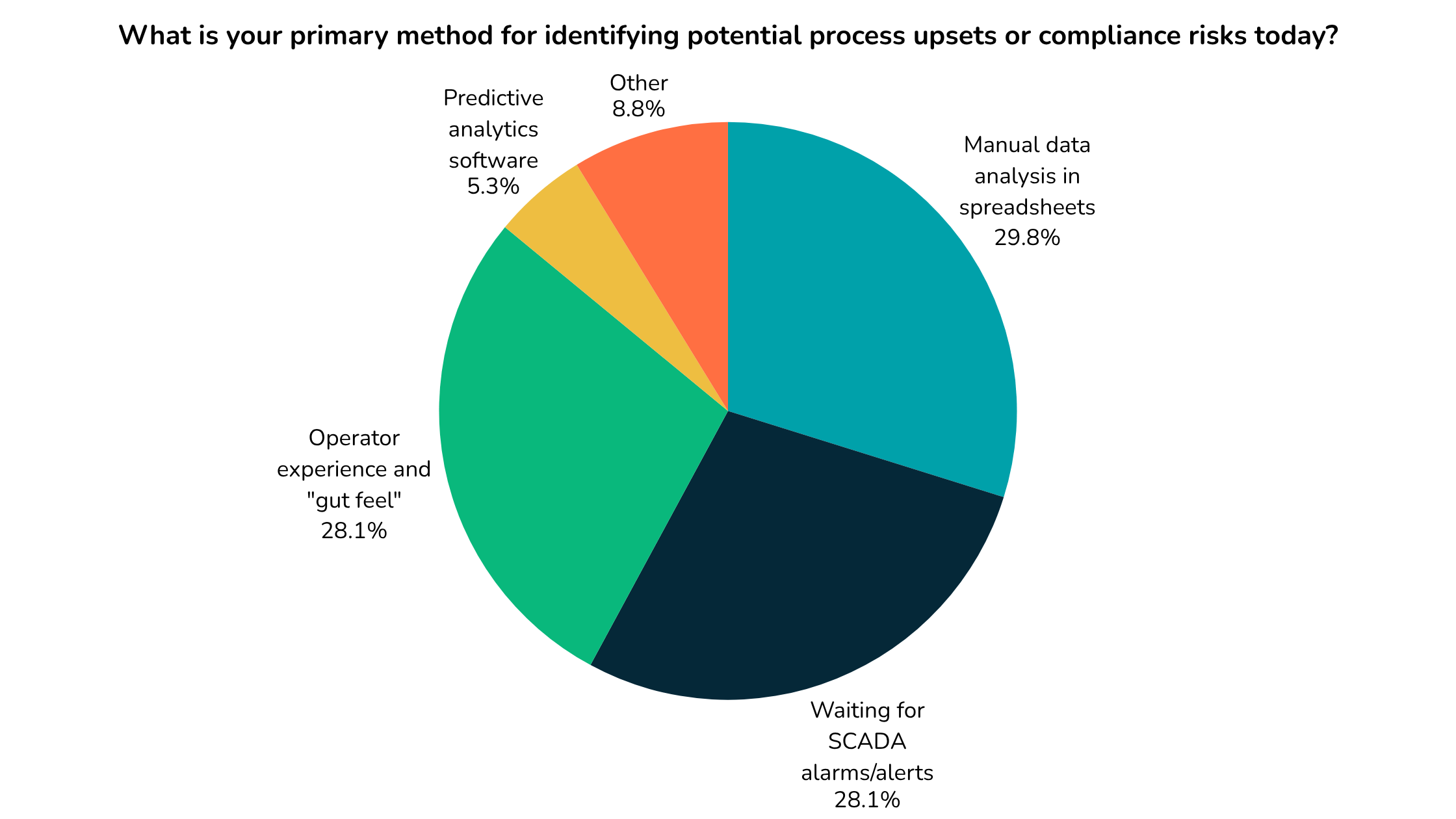
- Reactive vs. proactive: SCADA alarms are essential, but they’re designed to alert you when something has already happened. They rarely provide early warning of trends or emerging risks.
- The blind spot: When utilities rely on reactive signals and individual intuition, risk detection becomes inconsistent. That inconsistency leads to surprises—minor ones at best, and serious compliance violations at worst.
Institutional Knowledge Drain
Perhaps the strongest signal from our attendees was a deep concern about continuity. We see firsthand how much vital knowledge lives in people’s heads, handwritten notes, and informal spreadsheets. As workforce transitions accelerate, that knowledge is increasingly at risk of being lost.
- Digitizing how work actually gets done: There is growing demand for digitized Standard Operating Procedures (SOPs) and a shared operational context that reflects real‑world workflows.
- The path to AI‑readiness: Predictive analytics and AI depend on clean, structured, and unified data. Before advanced tools can add value, data must be pulled out of "spreadsheet jail" and placed into a defensible, governed environment.
waterCAST WQ: the Only Solution Built-to-Purpose
Many utilities have experimented with generic BI or data tools, only to find that they weren’t designed for the realities of treatment plants and labs. Water quality data is nuanced, highly regulated, and operationally critical.
We purpose-built waterCAST WQ to address these exact challenges:
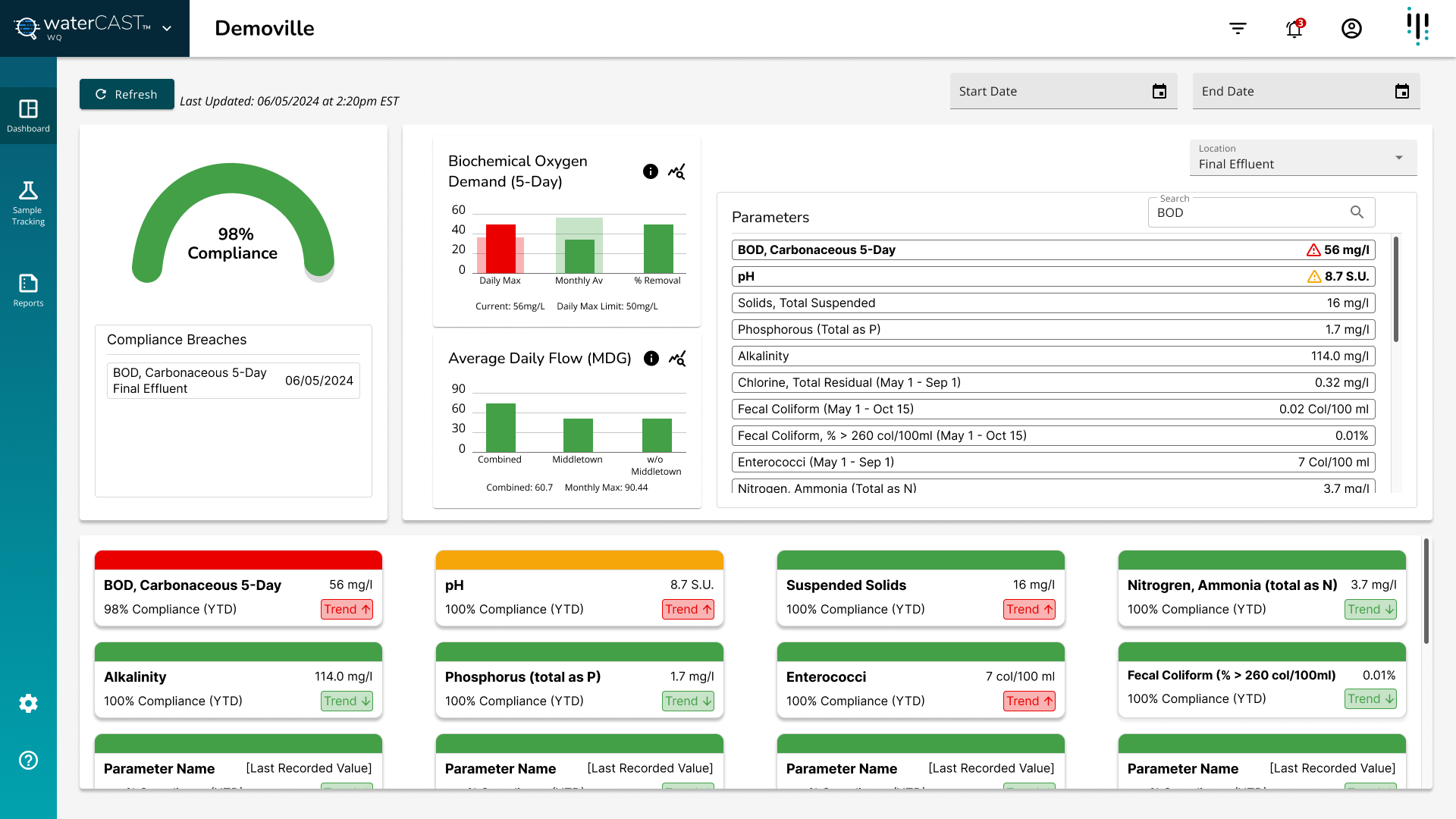
- Automated MOR and DMR workflows: The tool connects directly to your LIMS and SCADA, eliminating manual aggregation and dramatically reducing the effort it takes to report.
- A unified operational view: By bringing your data together, your team can see trends and correlations that are invisible in siloed systems.
- From intuition to insight: We support digitized SOPs and predictive analytics that reinforce operator expertise rather than replace it, helping you anticipate issues before they reach the effluent.
- Defensible compliance: Every data point is traceable and audited, providing you with confidence during regulatory reviews and internal decision-making.
Preparing for What’s Next
An AI‑ready future starts with dependable data and streamlined workflows. The window for relying on manual workarounds is closing quickly.
The industry feedback is clear: the current state is too manual and too risky. Utilities that continue to depend on spreadsheet‑driven reporting and reactive operations risk staff burnout, knowledge loss, and increased compliance exposure. Those that modernize their data foundation gain time, clarity, and confidence.
Is your utility ready to replace the reporting tax with predictive power? Watch the full webinar, From Firefighting to Foresight – Applying AI for Proactive Water Quality Compliance to see these findings in practice.


