
The regulatory landscape for drinking water is shifting, with the U.S. Environmental Protection Agency’s (EPA) Lead and Copper Rule Improvements (LCRI), the requirements for water systems have moved from a "rinse and repeat" cycle to a dynamic, high-stakes compliance marathon – and the starting line is fast approaching.
At Trinnex and CDM Smith, we’ve seen firsthand how planning for these changes—from lowered action levels to complex new sampling protocols—will create a significant data management burden for utilities across the country.
The Reality of the LCRI: Why "Business as Usual" Won't Work
For decades, many water systems have managed their lead compliance sampling via spreadsheets and paper logbooks. Under the LCRI, these manual processes are no longer just inefficient—they are a liability. Here are the three most significant hurdles facing utilities today:
1. Shifting Tiers and Dynamic Inventories
The LCRI introduces new tier classifications and sampling pool requirements, which will likely require significant adjustment and expansion of managed sample sites. Additionally, ongoing changes to the service line inventory will continually impact the status of the sample pool sites in new, challenging ways.
- Static vs. Dynamic: Because systems are now required to replace certain service lines and verify any remaining unknown locations on a 10-year timeline, a system’s sampling pool must be updated annually to reflect any new inventory information.
- Exhaustion Requirements: Systems must prove they have reached out to high-priority sites at least twice before moving to a lower tier for compliance sampling.
2. The Three-Day Notification Sprint
Perhaps the most daunting logistical challenge is the new three-business-day notification requirement. Systems must notify customers of their results within three days of receiving them from the lab—regardless of whether the result was above or below the action level.
- Manual Bottleneck: Batching results for a monthly mail-merge is no longer an option. If your data isn't moving in real-time, you are likely out of compliance.
- Electronic Notifications: While not required, the LCRI introduces specific provisions to allow electronic customer results notification, which may be more feasible to satisfy the 3-day requirement and to automate.

3. The "First and Fifth" Complexity
- One of the most notable shifts is the requirement to collect both 1st and 5th liter samples at locations with lead service lines (LSLs). To determine compliance, systems must use the higher of the two results in their 90th percentile calculation.
- This change is designed to better represent lead levels from both the home's plumbing and the service line itself, but it effectively doubles the physical and digital data footprint of every LSL sample.
Why leadCAST is the Only Solution Built-to-Purpose
While many generic software tools exist, leadCAST was engineered specifically to bridge the gap between water systems’ service line inventories and these rigorous new sampling demands.
- Auto-Tiering: leadCAST automatically determines your sampling tiers based on your current inventory data, instantly flagging sites that no longer meet criteria because of a replacement or verification.

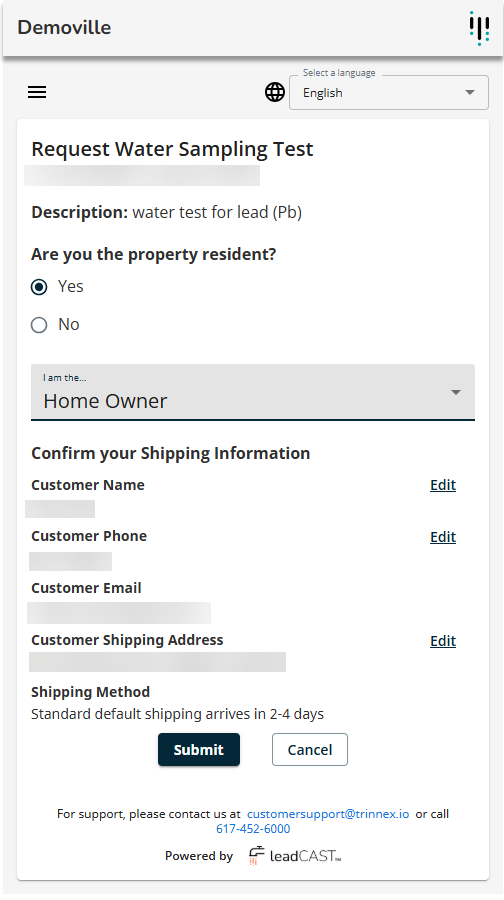
- Automated Notifications: By integrating directly with lab results, leadCAST can trigger automated customer notifications (via email or USPS mail), ensuring you hit that critical three-day window every single time.

- Integrated Field & Office Data: Through the leadCAST field app, field technicians can document customer refusals or site conditions in real-time, providing the "proof of outreach" required by state regulators.
- School & Childcare Management: leadCAST is already prepared for many other types of lead sampling that will be required by the LCRI, including schools and childcare facilities. Planning and tracking the 20% annual rate at these facilities, managing the unique sample site protocols and stagnation periods specific to these facilities.
The Bottom Line: Preparation is Compliance
As we approach the November 2027 compliance deadline, and the first full year of LCRI sampling in 2028, the period for careful planning a putting the necessary systems in place is shrinking. The EPA is standing firmly behind these requirements, and the courts are unlikely to offer a reprieve.
Utilities that wait to "wrap their heads around it" may find themselves facing serious compliance challenges or potential monitoring violations that could have been avoided with better data visibility.
Are you ready for LCRI Sampling? Don’t let your compliance program drown in a sea of spreadsheets.


