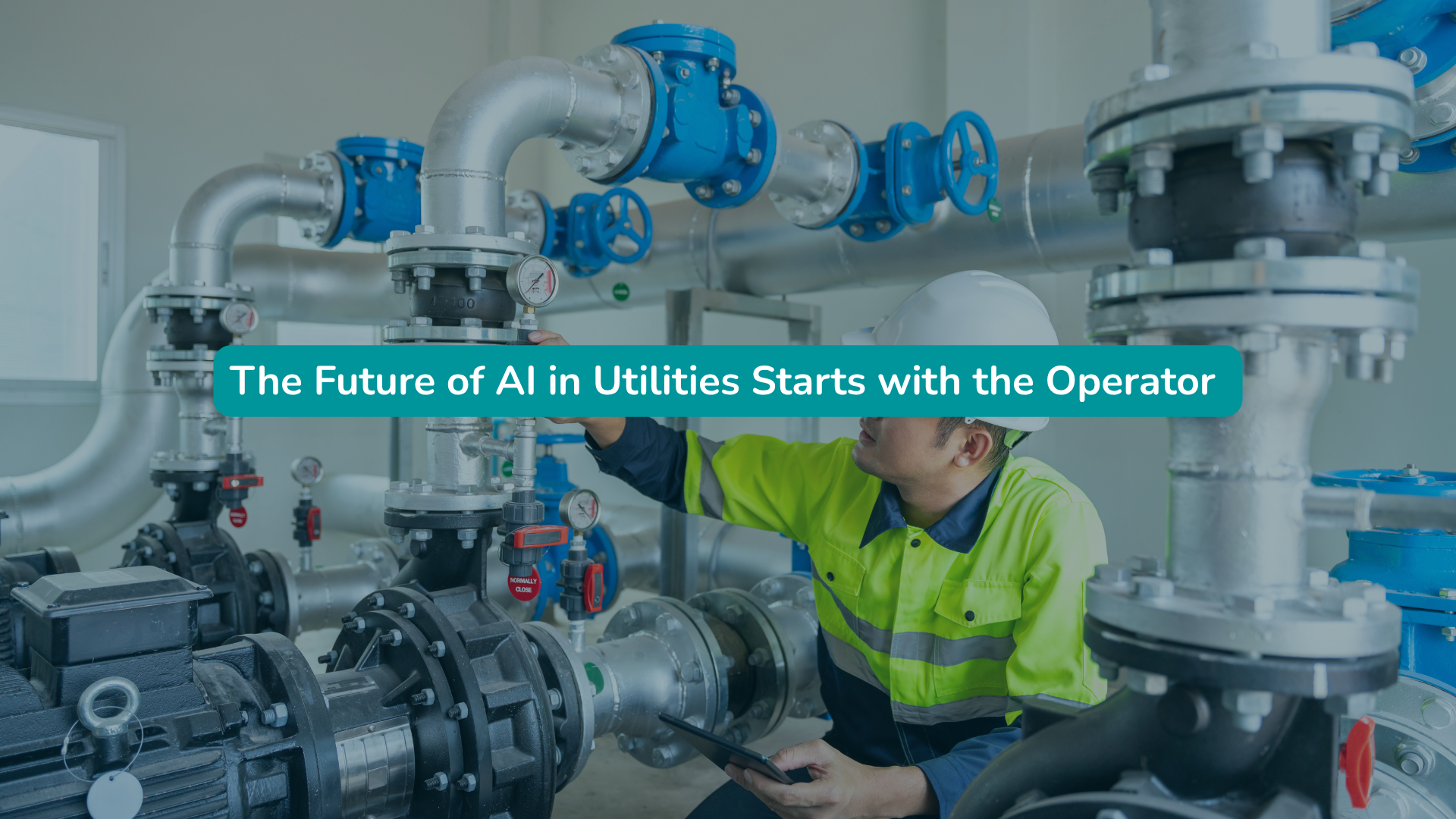

Conversations about AI in utilities tend to start with the technology: what a new model can generate, how fast a platform can analyze information, or which tasks might be automated next.
Inside a utility, the real measure of any new capability is far more practical. Leaders need to answer one question: Will this help the people responsible for keeping drinking water safe, wastewater treated, and every system running reliably and in compliance?
Answering that question starts with the operator. Operators are the heart of the utility, and here that word covers everyone who runs the system day to day: licensed treatment plant operators, distribution and collection crews, and the maintenance technicians who keep assets in service. Their day-to-day experience is the clearest test of any technology investment. When a tool helps them reach trusted information, apply their expertise, and make confident decisions, it creates real value. That is where the future of AI in utilities begins.
Workforce transition is a knowledge challenge
That test becomes more urgent as utilities navigate a generational shift in their workforce. An operator with decades of experience has built judgment through thousands of situations, subtle observations, and hard-won decisions. When that operator retires, much of that judgment goes with them, and no system can fully reproduce it.
What utilities can preserve is the knowledge surrounding that judgment. SOPs, operations and maintenance manuals, historical records, maintenance histories, and operational data all contain pieces of the story: how assets behave, how work gets done, and how past decisions were made. The opportunity lies in bringing those pieces closer to the employees who need them.
Picture a distribution crew responding to a main break in the middle of the night. Every minute counts: the crew needs to know which valves isolate the segment, which customers and critical facilities will lose service, and what the utility's procedure requires next. Too often, those answers are split across GIS layers, paper files, and thousands of PDF pages. A utility-specific AI could help the crew retrieve current, approved procedures and relevant system information, with citations and data timestamps for verification. Isolation and response decisions would remain with authorized utility personnel using confirmed field conditions.
In that moment, AI acts as a bridge. It helps the next generation of operators reach the utility’s best documented knowledge sooner, leaving human judgment to decide what comes next.
Trust must be designed into the experience
A fast answer only helps if the operator can trust it, and trust depends on a visible foundation. An AI response should draw from approved utility documents and data, point back to the source, and be candid when the available information is incomplete.
Those behaviors change the interaction from a simple transaction into a learning loop. A cited response can be checked. A missing answer can expose an outdated SOP, a documentation gap, or a data source that has not yet been connected. Operator feedback can then improve both the tool and the knowledge practices behind it.
Human intelligence remains part of the system at every step. Experts test whether an output makes operational sense, while users validate it in the context of real work. With each cycle of source review, subject-matter expertise, and user feedback, the technology becomes more useful, and the utility gains a clearer view of the knowledge it can trust. Ultimately, AI can support, but should not replace the judgment of licensed operators, engineers, and other authorized personnel. Responsibility for operational, safety, and compliance decisions remains with the utility.
Governance is how utilities create room to innovate
However, that trust should be built long before an answer reaches an operator. It begins with standards for how data and AI may be used: which information is appropriate for an experiment, who can access it, how outputs will be validated, and who is accountable for decisions. Bringing operations, IT, cybersecurity, and utility SMEs together early gives each group a view into the risks and responsibilities surrounding each AI use case.
With those boundaries in place, exploration becomes safer and more purposeful. One useful way to put those guardrails into practice is through a sandbox environment. A properly governed sandbox can reduce risk by using approved, isolated, or de-identified data; restricting access and exports; documenting retention; and preventing experimental outputs from being treated as operational truth. As the utility demonstrates value and understands the controls, it can make a more confident decision about what deserves to scale.
When a promising experiment moves closer to operations, cybersecurity and architecture become part of the same story. A tool that connects documents, enterprise systems, and operational data must reflect the utility’s security requirements from the start. Depending on the use case, that may mean cloud, on-premises, or hybrid deployment, tightly managed access, and close coordination with IT before operational users are invited in.
The interface is becoming more conversational
Once the foundation is in place, the way employees access information is likely to become more conversational. A process engineer may ask to compare effluent ammonia against blower energy use over the past month and receive an on-the-fly chart; a maintenance technician may ask for the last three work orders on a lift station pump and the manufacturer's rebuild procedure, and receive a documented answer. The experience shifts from navigating separate systems such as the SCADA historian, CMMS, GIS, and document libraries to expressing a need in familiar language
For the operator at the center of this story, that conversation must fit the work itself. It might happen through a chat interface on a plant terminal or a mobile device in the field. Whatever the format, the design should make documents, instructions, and relevant data easier to reach without requiring the user to understand every system working behind the response.
Creating that kind of experience requires more than placing a new interface over existing technology. Trinnex Custom Software Solutions begins with the operational challenge, then uses a collaborative, user-centered process to shape web, mobile, and integration tools around the people who will use them. The result is technology designed to feel like part of the work.
Leadership should organize around outcomes, not tools
For leaders, the path forward doesn’t depend on predicting every change in AI or software. It starts with the work already happening inside the utility: where employees lose time, where knowledge is difficult to reach, and where a better decision could create meaningful operational or financial value. Those friction points provide a clearer starting place than any list of new tools.
Starting with those friction points shifts the focus from buying technology to building capability. Strategy, data, security, software, and workforce adoption then work as parts of one operational story, each reinforcing the others as the utility moves from an initial need to a solution people trust and use.
Keep human judgment at the center
The story ends where it began: with the operator. The utility of the future will still depend on experienced people making informed decisions in complex situations. But its advantage will come from helping those people reach trusted knowledge faster and allowing expertise to move more easily across teams and generations.
Trinnex helps utilities move that operator-centered vision toward practical action, from advisory and governance through integration, analytics, and purpose-built software. Explore Trinnex Consulting Services to see how this approach can work at your utility.


